Viva la Fluffolution: What to Do When Your Kid's Stuffed Animals Declare Independence from the Toy Box
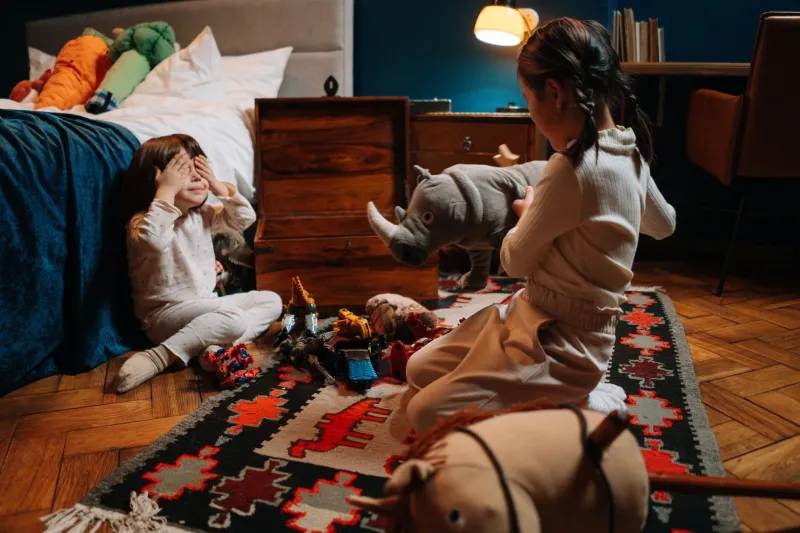
It started innocently enough. You asked your kid to put their stuffed animals away. Simple request, reasonable expectation, totally normal Tuesday night. And then your child looked you dead in the eye and said, with complete sincerity, "They don't WANT to go in the box. They're free now."
Welcome to the Fluffolution. Population: every plushie your kid owns, several couch cushions repurposed as barricades, and one bewildered parent wondering how they lost a negotiation to a corduroy rabbit.
Here's the thing, though — this is actually kind of brilliant. The chaos your kid is engineering, complete with rebel stuffed animals, dramatic escape routes, and passionate declarations of plushie freedom, is doing some seriously impressive developmental heavy lifting. Let's unpack it.
Why Your Kid Is Suddenly Running a Stuffed Animal Revolution
Children between roughly ages three and eight are in the thick of figuring out one of life's biggest mysteries: power. Who has it, how it works, and — most importantly — whether they can get some of it.
The thing is, kids operate in a world where adults make virtually every meaningful decision. What's for dinner. When bedtime is. Which shoes are appropriate for a grocery run (apparently not the Halloween skeleton ones, which is frankly a matter of ongoing debate in many households). Kids have very little agency over their actual lives, and their brains know it.
So what do clever little humans do? They find a domain where they can be in charge. Enter: the stuffed animal uprising.
When your kid scripts a scenario where Mr. Floppington the bunny refuses to comply with toy box rules, they're not just goofing around. They're practicing autonomy in a completely safe sandbox. The stuffed animals become proxies — stand-ins for the part of your child that wants to push back, test limits, and see what happens when authority gets challenged. Except nobody actually gets in trouble, because the rabbit did it.
Genius, honestly.
The Anatomy of a Typical Fluffolution
Every great rebellion has a structure, and your kid's is no different. Here's how these things tend to unfold:
Phase One: The Grievance Declaration. Something triggers the uprising. Maybe the toy box is "too dark" or "too crowded" or one stuffed animal has "a problem" with another one and simply cannot be expected to cohabitate. Your child will explain this to you with the gravity of a Senate hearing.
Phase Two: The Dramatic Escape. The stuffed animals are relocated — urgently, purposefully — to somewhere they've apparently decided is better. Under the bed. Lined up along the windowsill. Arranged in a semicircle in the hallway that you will absolutely trip over at 2 a.m.
Phase Three: The New Order. Your kid establishes what the stuffed animals do want, usually involving more freedom, better snacks (imaginary ones), and significantly fewer rules than they had before.
Phase Four: The Negotiation. This is where you come in. Your child will often — not always, but often — be open to some kind of compromise, because deep down they're not trying to blow up the system. They're trying to find out if the system has any give in it.
Spoiler: it's okay to let it have a little give sometimes.
What This Creative Chaos Is Actually Building
Child development researchers have long understood that imaginative play involving rule-breaking, rebellion, and power dynamics is a crucial part of how kids develop self-regulation, critical thinking, and emotional intelligence. When your kid stages a stuffed animal coup, they're practicing:
- Narrative reasoning — constructing a cause-and-effect story with motivations, consequences, and resolutions
- Perspective-taking — voicing characters who want different things than they do, or who represent feelings they're not quite ready to claim directly
- Conflict negotiation — working through what happens when two parties (the stuffed animals and the parent) want different outcomes
- Emotional processing — using the rebellion as a safe way to explore feelings about their own boundaries and autonomy
In other words, your living room floor covered in escaped plushies is basically a developmental laboratory. You're welcome.
How to Play It as a Parent (Without Losing Your Mind)
Here's the tricky part: you want to honor the creative intelligence behind the Fluffolution without accidentally letting your kid discover that a well-timed stuffed animal uprising gets them out of all household responsibilities forever. Balance, people.
Engage the premise before you redirect it. Before you say "okay, animals in the box, let's go," try asking one genuine question about the rebellion. "Wait — what started this? What did the toy box DO?" You'll get a fascinating answer, your kid will feel heard, and you'll have bought yourself approximately forty-five seconds of goodwill.
Offer the stuffed animals a "deal." Kids who are deep in imaginative play respond beautifully to parents who play along just enough. "Okay, I hear that Mr. Floppington doesn't want to go in the box. What if he got to sleep on the second shelf instead?" You've maintained the cleanup expectation while honoring the narrative. Everybody wins. Mostly you.
Let some rebellions succeed. Not every uprising needs to be quashed. If your kid's stuffed animals have "decided" they live on the bookshelf now and that genuinely works for your space, just... let them live on the bookshelf. Picking your battles isn't giving up. It's strategy.
Watch for what's underneath the uprising. Sometimes a stuffed animal rebellion is just delightful creative play. But occasionally, it's a signal that your kid is feeling a little powerless about something real — a new sibling, a change at school, a friendship that's gotten complicated. If the rebellions are especially intense or frequent, it's worth a gentle check-in about what's going on in their actual world.
JoeJoe Bear's Official Position on the Matter
Here at JoeJoe Bear, we have a lot of feelings about stuffed animals, and most of them are extremely supportive. A plushie that inspires a kid to build a whole political movement, draft demands, and negotiate with adults? That's a stuffed animal doing its job at the highest possible level.
The Fluffolution isn't a problem to solve. It's a window into one of the coolest things a child's brain does — take big, complicated feelings about power and control and spin them into something creative, funny, and completely harmless.
So the next time your kid informs you that the stuffed animals have voted and the toy box has been abolished, take a breath. Ask what the new government looks like. Maybe suggest a constitutional amendment about bedtime storage.
And then quietly appreciate the fact that you're raising a kid imaginative enough to start a revolution — and wise enough to do it with stuffed animals instead of, you know, anything actually inconvenient.
Viva la Fluffolution. Long may it reign (within reasonable cleanup hours).