Passing the Paw: How to Help Your Kid Decide Which Stuffed Animals Belong to the Next Generation
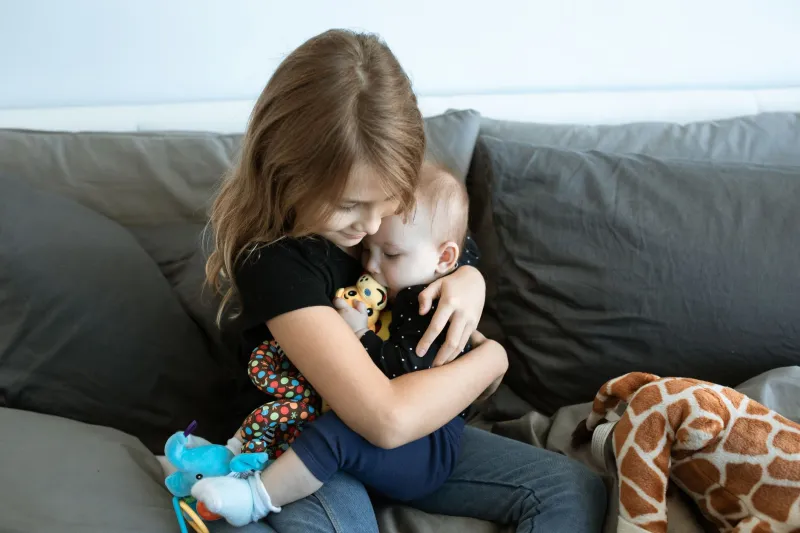
Let's be honest. You did not expect the hardest conversation of the week to involve a lopsided giraffe named Gerald and a faded purple bunny with one eye. And yet here you are, standing in the middle of your kid's bedroom while they clutch seventeen stuffed animals to their chest and stare at you like you just proposed selling the family dog.
Welcome to the Stuffed Animal Inheritance. It is real. It is emotional. And it is absolutely worth handling with care.
When a younger sibling arrives — or grows old enough to actually want things — the question of which plushies get passed down can feel surprisingly enormous to an older child. These aren't just toys. They're companions, confidants, and tiny soft witnesses to some of the biggest moments of your kid's life so far. Asking them to give one up, even to someone they love, is a genuinely complex emotional ask. So let's talk about how to do it well.
Why This Moment Matters More Than You Think
Developmentally speaking, kids between the ages of four and eight form some of their most intense attachment bonds with objects — and stuffed animals sit right at the center of that. Psychologists call these "transitional objects," and the name tells you everything. They help kids bridge the gap between dependence and independence, between scary and safe.
So when you ask your seven-year-old to hand over the bear that helped them survive every thunderstorm and first day of school since they were two, you're not asking them to clean out a toy box. You're asking them to revisit their own emotional history and make a decision about what belongs in the past.
That's big stuff. Treat it accordingly.
Don't Make It About Decluttering
Here's the first trap parents fall into: framing the whole thing as a practical exercise. "We need to make space." "You don't play with those anymore." "Your sister needs something to sleep with."
All of those things might be true! But leading with logistics sends the message that the stuffed animals' value is about utility — and your kid knows better. They know that Gerald the giraffe isn't useful in any traditional sense. He's important. There's a difference.
Instead of framing it as a cleanout, frame it as a legacy moment. You're not asking your kid to get rid of anything. You're asking them to choose an ambassador. Which of their beloved plushies is ready for a new adventure? Which one has enough love stored up inside it to help a little sibling feel safe?
Kids respond beautifully to this framing. It shifts the narrative from loss to purpose.
Let Them Lead the Selection (With Gentle Guidance)
Resist the urge to point at the pile and say, "What about that one? You haven't touched it in a year." Even if that's completely accurate, it puts your child on the defensive immediately. They will suddenly remember exactly how much they love that particular stuffed narwhal.
Instead, ask open-ended questions:
- "Which of your animals do you think has the most love to give?"
- "Is there one that you think would be really good at helping someone feel brave at night?"
- "Which one do you think would be happy to have a new best friend?"
These questions invite your child into the process as an expert — because they are the expert on their own collection. They know which animals have "used up" their primary mission and which ones still have work to do. Trust that instinct.
Also important: don't rush it. Give them a few days to sit with the idea. A decision made under pressure is a decision that gets resented later.
Honor the Handoff With a Real Moment
One of the most powerful things you can do is make the actual passing-down feel ceremonial. Not over-the-top dramatic — just intentional.
Let your older kid introduce the stuffed animal to their younger sibling themselves. Encourage them to share its name, its backstory, maybe even a piece of advice. ("This is Captain Fluffington. He's really good at making scary things feel less scary. You can tell him anything.")
This gives your older child authorship over the transition. They're not losing Captain Fluffington — they're entrusting him to someone who needs him. That's a completely different emotional experience.
Some families even create a little handoff tradition: a small certificate, a photo of the original owner with the plushie, or a note tucked inside a pocket if the stuffed animal has one. These details take about five minutes and create memories that last genuinely forever.
What to Do When They Change Their Mind
Sometimes a kid will agree to pass something down, and then three days later they want it back. This is normal. This is not manipulation. This is a child processing a big emotional transaction and discovering they weren't quite ready.
If the younger sibling hasn't bonded with the plushie yet, an easy return is usually fine. If they have bonded — well, now you have a different situation, and it's worth a gentle conversation about what it means to give something as a gift.
But don't shame the older child for having second thoughts. Acknowledge that it's hard. Sit with them in it. Sometimes just saying "I know this feels really big, and that makes sense" is enough to help them find their footing again.
The Secret Gift in All of This
Here's what nobody tells you about the Stuffed Animal Inheritance: it's actually one of the first real opportunities your child has to practice generosity with something that genuinely costs them something emotionally.
Anyone can donate a toy they don't care about. It takes a different kind of heart to offer up something beloved — something that has their fingerprints and their tear stains and their history all over it — because they believe it will matter to someone else.
That's not a small thing. That's the early architecture of empathy, compassion, and love that doesn't keep score.
So yes, the conversation might be messy. There might be tears (from the kid, from you, possibly from both of you at the same time while a stuffed giraffe watches silently from the shelf). But handled with patience and warmth, this moment can become something your family talks about for years.
And somewhere down the line, when your younger kid is clutching that same lopsided giraffe through their own thunderstorms and first days of school — well. That's the whole point, isn't it?
JoeJoe Bear believes every stuffed animal has more love to give. Sometimes it just needs a new pair of paws to hold it.