Undercover Plushies: The Secret Hideouts Your Kid Is Building (and What They're Really Trying to Tell You)
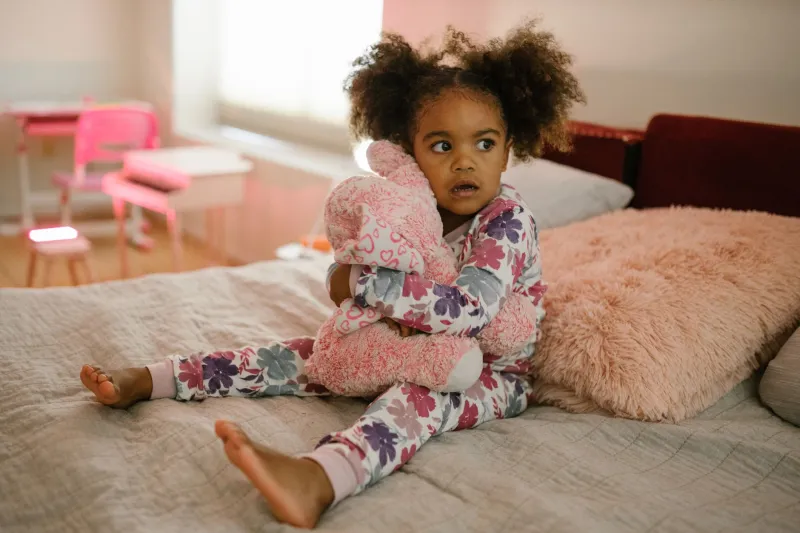
It started innocently enough. You went to tuck in your five-year-old and realized that Señor Floppers — the beloved, slightly crusty bunny who has been a fixture of bedtime since 2021 — was nowhere to be found. You checked under the pillow. Behind the headboard. Inside the pillowcase. Nothing. Forty-five minutes later, your partner discovered him buried underneath a stack of board games in the hall closet, wrapped in a dish towel like some kind of plushie burrito.
Welcome to the hidden world of the Great Plushie Underground.
If your house has become a covert network of stuffed animal safe houses, you are not alone. Kids across America are squirreling away their beloved fuzzy companions in spots that defy all logic — and honestly? It's one of the most developmentally fascinating things they can do.
Why Kids Hide Their Stuffed Animals in the First Place
Here's the thing nobody tells you at the pediatrician's office: hiding stuff is actually a power move. A very small, adorable power move, but a power move nonetheless.
Children operate in a world where almost every decision is made for them. What they eat, when they sleep, whether they have to wear the itchy sweater to Grandma's house — all of it is controlled by the giants who run the household. Stuffed animals, however? Those belong entirely to the child. They are sovereign territory.
When a kid tucks their plushie into a secret spot, they're not being sneaky for the sake of it. They're exercising one of the only forms of genuine autonomy available to them. They're saying, I have something precious, and I get to decide where it lives. Child development specialists have long noted that children between the ages of three and eight are particularly invested in claiming small pieces of the world as their own — and the family stuffed animal collection turns out to be prime real estate for that kind of ownership.
So the next time you find a plushie stashed inside a rain boot, try to resist the urge to reorganize. That boot is basically a tiny fortress of self-determination.
The Most Unhinged Hiding Spots (Ranked by Parental Bewilderment)
In the spirit of solidarity, let's acknowledge the hall of fame of stuffed animal hideouts that real parents have actually reported:
- The Vegetable Drawer. Apparently, kids have figured out that adults rarely open this one. Genius, honestly.
- Inside a Pillowcase Inside Another Pillowcase. A plushie matryoshka doll situation. Respect.
- Behind the Washing Machine. Terrifying for laundry reasons. Adorable for all other reasons.
- Zipped Inside a Suitcase in the Attic. One child reportedly explained this was so her bear "didn't have to go to school."
- Under the Dog. The dog, for the record, seemed completely fine with this arrangement.
- In the Toilet Tank Lid. We have questions. We will not be asking them.
The creativity is genuinely staggering. Kids are basically running their own CIA field offices out of their bedrooms, and their operational security is impressive.
What the Hiding Spot Tells You About Your Kid
Not all hiding spots are created equal, and if you pay attention, the where can tell you quite a bit about the why.
Hiding plushies in their own room — under mattresses, in drawers, inside toy bins — usually signals that a child wants privacy and a sense of personal sanctuary within their space. This is healthy. Encourage it.
Hiding plushies in communal spaces — the living room couch cushions, the pantry shelf, inside a jacket pocket — often means a child wants their companion nearby without anyone noticing. This can happen during periods of stress or transition, like starting a new school year or adjusting to a new sibling. The plushie is basically a portable emotional support station, deployed in disguise.
Hiding plushies in unusual or "forbidden" zones — like a parent's bedroom or a high shelf they had to climb to reach — is frequently about testing boundaries and asserting a little bit of delicious rebellion. Totally normal. Mildly exhausting.
Rotating hiding spots is its own category altogether. If your kid moves their stuffed animals around regularly, they may simply be engaging in elaborate imaginative play — the plushies have missions, destinations, whole fictional lives you are not privy to. This is the good stuff. This is childhood working exactly as intended.
How to Discover the Hideouts Without Blowing the Operation
Here's where it gets delicate. Because as much as you might want to know exactly where Señor Floppers is at all times (for laundry purposes, obviously), barging into your kid's secret system can feel like a genuine violation of their trust.
A few ground rules:
Don't surveil. Observe. There's a difference between casually noticing that your kid always checks behind the bookcase before bed and installing some kind of parental tracking system for stuffed animals. The first is attentive parenting. The second is a lot.
Ask with curiosity, not suspicion. If you genuinely need to locate a plushie — say, it needs a wash or you're packing for a trip — try framing it as an invitation rather than an interrogation. "Hey, I was thinking Floppers might want to come with us to Grandma's. Do you know where he's hanging out today?" leaves the child in control of the information.
Let them show you. Some kids are dying to give you the grand tour of their secret plushie infrastructure. They just need to feel like it's their idea. Express genuine interest — "I wonder where a bunny would feel cozy in this house" — and see if they take the bait.
Respect the hideout even when you find it. If you stumble across the stash while cleaning, don't reorganize it. Don't move it. Leave it exactly as you found it and quietly back away. This is non-negotiable.
Using This Knowledge to Build Something Real
Understanding why your kid hides their plushies opens up a genuinely useful parenting conversation about autonomy, privacy, and trust. Kids who feel like they have some measure of control over their personal world tend to be more cooperative in the areas where they don't have control — like, say, bedtime or vegetable consumption.
Consider setting aside a designated "secret spot" in your child's room — a small box, a special drawer, even just a basket with a lid — that is explicitly theirs and theirs alone. Make it clear that you won't go looking in there without permission. Watch what happens. More often than not, kids who are given a sanctioned private space stop feeling the need to hide things in the washing machine.
And if Señor Floppers occasionally disappears for a few days? Let him. He's on a mission. He'll be back.
The Takeaway from JoeJoe's Corner
At JoeJoe Bear, we've always believed that stuffed animals are doing a lot more work than they get credit for. They're emotional anchors, creative collaborators, and apparently, covert operatives in a child's ongoing project of figuring out who they are and what they control in this big, overwhelming world.
The hiding? It's not mischief. It's architecture. Your kid is building an interior life, one secret plushie hideout at a time — and that's something worth finding (even if it takes you forty-five minutes and a flashlight).