Tiny Thieves, Big Feelings: The Hilarious (and Actually Deep) Reason Kids Try to Walk Off With Their Friends' Stuffed Animals
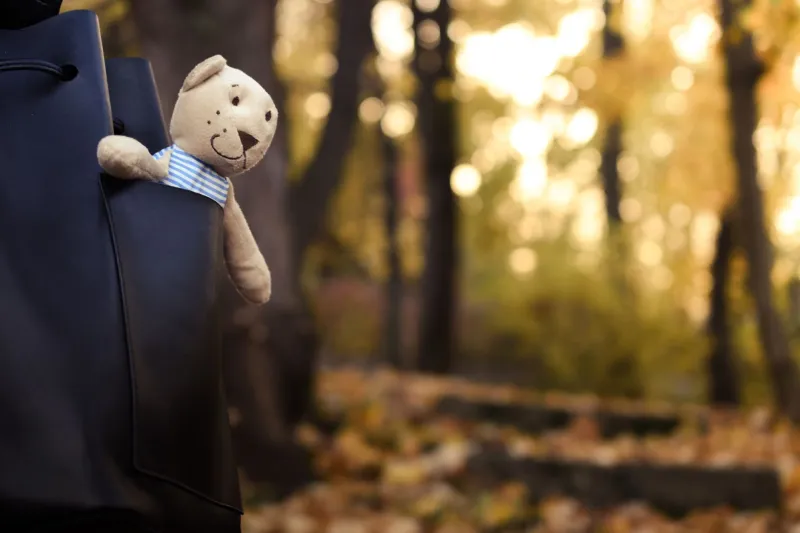
It happens to the best of us. The playdate is winding down, shoes are being located, juice boxes are in the recycling, and then — freeze — you notice your child making a suspiciously lumpy beeline for the front door. That lump? It's Biscuit. The irreplaceable, can't-sleep-without-it, belongs-to-your-kid's-best-friend stuffed golden retriever. And your child has absolutely zero regrets.
Welcome to the Great Stuffed Animal Heist, a rite of passage so common it practically deserves its own true-crime podcast. ("Unsolved Plushies" — someone get on that.)
Before you start drafting your apology text to the other parent, let's talk about what's actually going on inside that little head. Because spoiler alert: it's not malice. It's not even really theft, developmentally speaking. It's something far more interesting.
The Magnetic Pull of Someone Else's Stuff
Here's the thing about kids and stuffed animals: the connection isn't always about the toy itself. It's about what the toy represents. When your child locks eyes on their friend's plushie — especially one that's clearly well-loved, a little matted, maybe missing an eye — they're not just seeing a stuffed animal. They're seeing proof of a bond. A relationship. A feeling they want in on.
Child development experts call this "social referencing," which is a fancy way of saying kids pick up emotional cues from the people around them. When your kid watches their friend hug Biscuit with total abandon, something in their little brain goes, I want that. Whatever THAT is. And since they can't bottle the feeling, they do the next logical thing: they try to take the physical object.
Is it rational? No. Is it deeply, painfully human? Absolutely.
"But I Just Wanted to Borrow It Forever"
Kids under about six years old are still operating in a world where the concept of ownership is genuinely fuzzy. To a four-year-old, "mine" and "yours" are less like legal designations and more like suggestions. If they want it and it's currently unattended, the logic is airtight: possession equals ownership. Case closed. Court adjourned.
This is also the age where "borrowing" can mean anything from "I'll give it back in five minutes" to "I'll give it back when I'm thirty-seven and cleaning out my childhood bedroom." There's no deception intended — they just don't fully grasp that the other kid's devastation is real, permanent, and currently making that other parent's eye twitch.
Around ages five to seven, something more nuanced starts happening. Kids begin to understand ownership, but they're also developing a sophisticated (and occasionally manipulative) emotional vocabulary. This is when you'll hear classics like, "Snowball wanted to come home with me," or "Fuzzy told me she was lonely." They're not lying, exactly. They've just cast the stuffed animal as a co-conspirator in their own emotional narrative.
Honestly? Points for creativity.
What the Heist Is Actually Telling You
If your kid is repeatedly trying to acquire other children's stuffed animals, it's worth pausing to ask what's going on beneath the surface. A few common culprits:
They're craving comfort. Stuffed animals are emotional anchors. If your child is going through a transition — new sibling, new school, a disrupted routine — they may be seeking extra security. The other kid's plushie just happened to be in the wrong place at the right time.
They're feeling a little envious of the friendship. Sometimes the stuffed animal isn't the point at all. The point is the closeness they witnessed between their friend and that toy. What they really want is that kind of connection — maybe with you, maybe with a toy of their own that carries that same weight.
They genuinely just loved it. Sometimes a stuffed animal is just an incredibly good stuffed animal, and your kid has taste. This is the most straightforward explanation and, frankly, the easiest to work with.
Navigating the Aftermath Without Losing Your Mind
Okay, so you've caught your kid mid-heist. Now what?
Stay calm and skip the shame spiral. Your kid isn't a criminal. They're a small person with big feelings and underdeveloped impulse control. Reacting with outsized horror will embarrass them without teaching them anything useful.
Make the return a teaching moment, not a trial. Walk your child through giving the toy back — ideally in person, if possible — and help them find the words. "I took this and I shouldn't have. I'm sorry." That's it. Simple, direct, done. You don't need a twelve-minute lecture. Their attention span won't survive it.
Talk about the feeling, not just the action. After the dust settles, get curious. "You really loved that stuffed animal, huh? What did you like about it?" You might be surprised what comes out. And that conversation might lead somewhere really useful — like figuring out whether your kid needs a new comfort toy of their own, or more one-on-one time with you, or just a good nap.
Set up a "want list" ritual. If your kid has a pattern of coveting other people's plushies, channel that energy productively. Keep a running list of stuffed animals they love the look of, and revisit it around birthdays or holidays. Giving them agency over future acquisitions can reduce the urgency to just take things right now.
A Note to the Parent on the Other Side
If your kid's stuffed animal was the one that got temporarily liberated — first of all, we're so sorry. Second, this is also a genuinely great opportunity for your child. Watching you handle the situation with grace teaches them that conflicts get resolved, that people make amends, and that Biscuit always comes home.
Plus, Biscuit has a story now. A adventure. That's basically a promotion.
The JoeJoe Bear Take
Here at JoeJoe Bear, we believe stuffed animals are basically tiny emotional superheroes — and the feelings they stir up in kids are almost always worth paying attention to. A plushie heist isn't a parenting failure. It's a flashing neon sign pointing directly at something your kid needs.
So the next time you find a suspiciously lumpy child trying to sneak out the door, take a breath, retrieve the goods, and get curious. The real treasure isn't the stuffed animal. It's the conversation waiting on the other side of returning it.
Now if you'll excuse us, JoeJoe has some very strong feelings about a certain stuffed elephant he met at a playdate last Tuesday, and we have some explaining to do.