Welcome to Plushie Town: How Kids Build Entire Economies Around Their Stuffed Animals
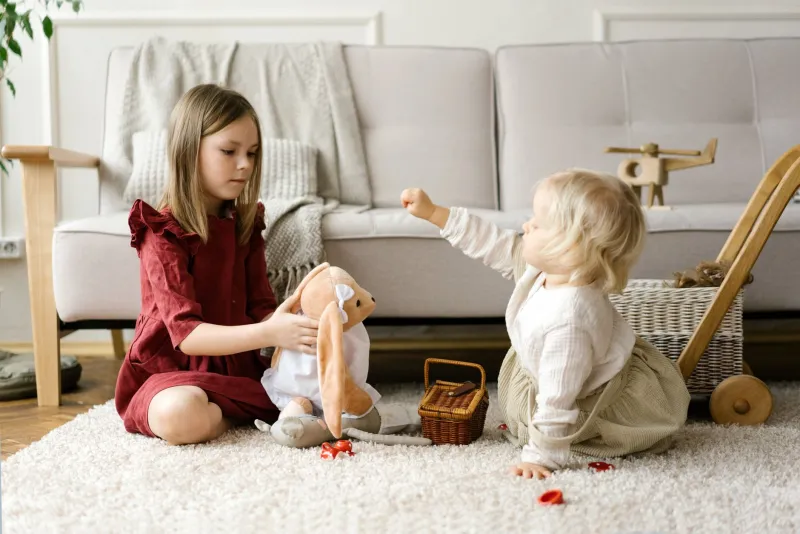
Somewhere between breakfast and bath time, your child has established a functioning civilization. It has a currency system, a diplomatic corps, territorial boundaries, and at least one ongoing trade dispute that has been simmering since last Tuesday. The citizens? A rotating cast of stuffed bears, bunnies, dragons, and that one inexplicable avocado plushie your kid named Gerald the Second.
Welcome to Plushie Town. Population: however many stuffed animals your kid has crammed under the bed.
If you've ever watched your child conduct a ten-minute negotiation over which stuffed animal gets to sit next to the window at lunch, you already know this world exists. What you might not know is that all that wheeling and dealing is quietly doing something remarkable for your kid's brain.
The Rules Nobody Wrote Down (But Everyone Knows)
Every Plushie Town has a constitution. It's unwritten, obviously, because your kid is seven — but don't let that fool you. The rules are ironclad.
There's a hierarchy. The beloved, battle-worn bear who's been around since infancy? That's the mayor. Maybe the president. Possibly both. New arrivals — birthday gifts, prize-booth rescues, that random giraffe from the airport — start at the bottom and work their way up through a process that only your child fully understands. Seniority matters. Scarcity matters. That limited-edition bear your kid got at a theme park in Orlando? Practically royalty.
Child development researchers have long noted that children between the ages of three and eight use dramatic play to rehearse social systems they observe in the real world. When your kid assigns stuffed animals to specific seats, specific roles, or specific rules about who can touch what, they're not being weird. They're being a tiny, adorable economist.
Barter, Trade, and the Art of the Plushie Deal
If you have more than one kid in the house, you've witnessed the negotiations. They can be breathtaking in their complexity.
"I'll let you borrow Cinnamon Roll Bear for one afternoon, but only if she stays in the living room and you give me the pink blanket until Friday."
That sentence contains a loan agreement, a usage restriction, a collateral arrangement, and a sunset clause. Your kid didn't learn that in kindergarten. They invented it.
Siblings who trade stuffed animals are unknowingly practicing the foundational mechanics of economics: assigning value, identifying leverage, and reaching a deal that both parties can live with. The fascinating part is how kids determine value in the first place. It's almost never about the price tag. A $5 thrift store bunny can outrank a $40 department store bear if the bunny has the right backstory, the right name, or the right number of tea party appearances on its résumé.
This is, as it turns out, not so different from how real markets work. Brand loyalty. Emotional attachment. Perceived scarcity. Your kid figured all of that out using nothing but a plush rabbit and a sibling who really wanted to borrow it.
Seating Charts, Territories, and the Politics of the Dinner Table
Every family has their version of this moment: you sit down to eat and discover that three stuffed animals have been assigned chairs, one of them is wearing a napkin as a cape, and your kid is deeply offended that you moved the elephant.
This isn't chaos. This is urban planning.
The physical arrangement of stuffed animals in a child's world is a map of their social and emotional priorities. Who sits at the table signals who matters most right now. Which animals get the bed versus the floor reflects a whole internal ranking system. The designated "safe zone" (often a specific basket, shelf, or corner of the couch) is essentially a protected territory — and woe unto the parent who accidentally tosses a resident of the safe zone into the laundry pile.
Psychologists who study children's play note that these spatial arrangements help kids develop a sense of order, ownership, and responsibility. Your child isn't just deciding where the bear sits. They're practicing the idea that things have places, that agreements matter, and that disrupting an established system has consequences. Heavy stuff for someone still figuring out shoelaces.
What Happens When the Economy Crashes
Every economy has its recessions, and Plushie Town is no exception.
Maybe a beloved stuffed animal gets lost. Maybe a trade goes sideways and someone feels cheated. Maybe a younger sibling violated the sacred rules of the safe zone and now the entire diplomatic relationship between the two bedroom territories is in shambles.
These moments — as frustrating as they are to referee — are genuinely valuable. When a trade feels unfair, your kid has to figure out how to articulate why. When a deal falls apart, they have to decide whether to renegotiate or walk away. When someone breaks the rules, they have to weigh consequences and decide what fairness looks like.
These are not small skills. Conflict resolution, advocacy, and ethical reasoning are things adults spend entire therapy sessions trying to develop. Your kid is workshopping all of it with a raccoon plushie and a very strong opinion about who gets the window seat.
The best thing you can do as a parent? Resist the urge to fix it immediately. Let the negotiation happen. Ask questions: "Does that trade feel fair to you? What would make it feel better?" You're not just solving a stuffed animal dispute — you're coaching a future collaborator, negotiator, and community member.
JoeJoe Bear's Unsolicited Economic Advice
Here at JoeJoe Bear HQ, we've seen a lot of plushie economies in action, and we have a few observations:
Honor the hierarchy. If your kid has a clear ranking system for their stuffed animals, try not to disrupt it casually. It means something. Ask about it. You might be shocked by the lore.
Let the trades happen. Sibling stuffed animal negotiations are annoying to watch, but they're genuinely educational. Step in only if someone's being steamrolled — otherwise, let the deal-making run its course.
Don't underestimate the unwritten rules. That specific spot on the couch. The particular order animals get tucked in at night. The one bear who always has to face the door. These rituals matter to your kid, and honoring them costs you nothing while earning you enormous credibility in Plushie Town.
Take the crashes seriously. When the economy collapses — when something gets lost, broken, or unfairly traded — treat it with the gravity your kid is bringing to it. Their feelings are real, even if the currency is stuffed.
The Bigger Picture in the Fuzzy Details
It's easy to look at a kid arranging stuffed animals at the dinner table and see a cute quirk. But zoom out a little and you see something genuinely impressive: a child building a model of the world, testing how systems work, learning what fairness feels like from the inside, and practicing the social architecture they'll use for the rest of their lives.
Plushie Town isn't just play. It's a training ground.
And honestly? Given some of the negotiating we see from actual adults, we could all stand to spend a little more time in the stuffed animal economy.
JoeJoe Bear: Big Fun for Little Paws — and apparently, a surprisingly functional GDP.