Monsters Under the Mattress: A Parent's Playbook for Taking Bedtime Fears Seriously
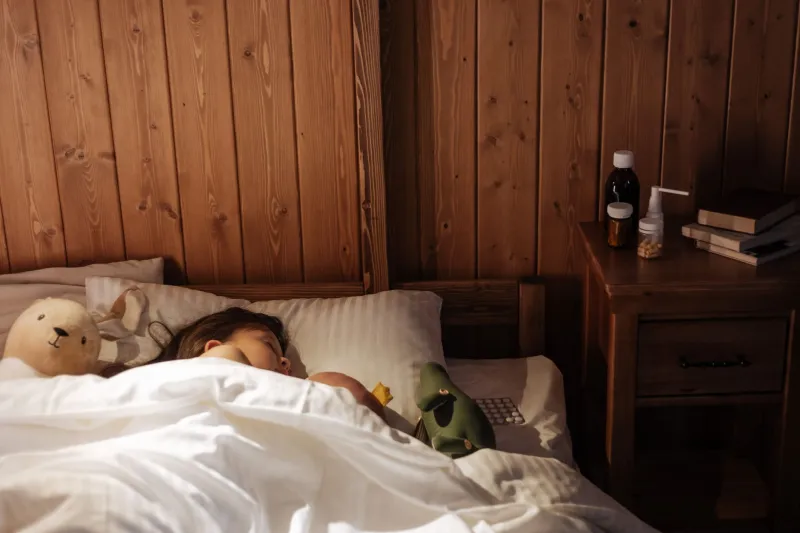
It's 9:47 PM. The house is quiet. You've done the whole routine — bath, books, that one song you've sung so many times you could perform it at Carnegie Hall. You tiptoe toward the door, and then: "Mom. I'm scared."
Cue the internal parental debate. Do you sit back down? Do you explain (again) that the shadow on the wall is just the laundry hamper? Do you promise that monsters don't exist while simultaneously wondering if your kid is picking up on something you're not?
Here's the truth: bedtime fear in children is one of the most universal, developmentally normal, and genuinely misunderstood parts of childhood. And how you respond in those dim, quiet moments matters a whole lot more than you might realize.
Why Nighttime Turns Up the Volume on Fear
Daytime is a glorious distraction machine. There are snacks, and playgrounds, and approximately 400 questions to ask about dinosaurs. But when the lights go out, all of that external noise disappears — and a child's inner world gets very, very loud.
Developmental psychologists point out that children between the ages of 3 and 8 are in a prime window for fear development. Their imaginations are absolutely booming (which is wonderful for creativity and play), but that same supercharged imagination doesn't come with an off switch. Combine that with a still-developing prefrontal cortex — the brain's "calm down, it's fine" department — and you've got a recipe for some genuinely terrifying bedtime experiences.
For kids, the fear isn't irrational. It's real. The monster isn't metaphorical to them — it's there, just out of sight, waiting for the exact moment you leave the room. Dismissing that fear, even gently, sends a message that their inner experience isn't trustworthy. And that's a message we really don't want to send.
The Worst Thing You Can Say (and What to Say Instead)
Let's pour one out for the phrase "There's nothing to be scared of." It's well-meaning. It comes from love. It is also, unfortunately, about as effective as telling someone in a thunderstorm that rain is just water.
When a child hears "there's nothing to be scared of," what they actually process is: My feelings are wrong. That's a rough emotional lesson to absorb at 10 PM in the dark.
Instead, try leading with validation before you move toward reassurance. Here are a few dialogue starters that actually work:
- "That sounds really scary. Tell me more about what you're imagining." — This opens the door without slamming the fear away.
- "I believe you that it feels scary. Fear is a feeling our brain makes to try to protect us." — Age-appropriate neuroscience! Kids love knowing their brain is doing something on purpose.
- "What would make you feel a little safer right now?" — This gives them agency, which is enormously calming.
- "Even when I feel scared, I remember that I'm safe. Let's think of one thing that makes you feel safe." — Modeling your own emotional experience normalizes fear without amplifying it.
The goal isn't to argue a child out of their feelings. It's to sit beside those feelings long enough that the child doesn't feel alone inside them.
Enter the Emotional Anchor: Your Kid's Stuffed Best Friend
Here's where JoeJoe Bear would like to formally apply for the position of Certified Fear-Buster.
Comfort objects — stuffed animals, beloved blankets, that one weird sock puppet your kid inexplicably adores — serve a genuinely important psychological function. Child development researchers describe these as "transitional objects," items that help kids bridge the gap between dependence and independence. At bedtime, that bridge is doing some heavy lifting.
A stuffed animal isn't just soft and cute (though it is absolutely both). It's a constant. It smells familiar. It doesn't leave the room. For a child navigating the terrifying landscape of nighttime imagination, having a physical object to hold gives their nervous system something concrete to anchor to.
You can even lean into this intentionally. Try giving the stuffed animal a "job" at bedtime — maybe JoeJoe Bear is the official monster-spotter, or the keeper of brave thoughts. Kids respond incredibly well to narrative, and turning a comfort object into an active protector gives the child a sense of control over their scary environment.
Building a Fear-Friendly Bedtime Routine
Consistency is basically a superpower when it comes to childhood anxiety. A predictable routine tells a child's nervous system: This is safe. We've done this before. We know what happens next.
Consider weaving a "worry window" into the routine — a specific, brief time before lights-out when your child is invited to share anything that's on their mind. Give it a name, make it feel special, keep it short. The point is to create a designated container for scary thoughts so they don't ambush everyone at 11 PM.
You might also try the "brain dump" method for older kids (ages 6 and up): keep a small notebook by the bed where worries get written or drawn out before sleep. The act of externalizing a fear — getting it out of the head and onto paper — has genuine calming effects.
For younger kids, a simple breathing exercise works wonders. "Smell the pizza, blow out the candles" is a classic for a reason: big inhale through the nose, slow exhale through the mouth. Do it together. Do it with the stuffed animal "helping." Make it silly. Silly is the enemy of scary.
When Fear Becomes Something More
Most bedtime anxiety is garden-variety developmental stuff that responds well to patience, validation, and a good stuffed bear. But sometimes fear at bedtime is a signal worth paying closer attention to.
If your child's fears are intensifying over time rather than easing, if they're interfering significantly with sleep for weeks at a stretch, or if the anxiety is bleeding into daytime activities, it's worth a conversation with your pediatrician or a child therapist. There's no shame in getting backup — even the bravest bears ask for help sometimes.
The Bottom Line
Bedtime fears aren't a parenting failure. They're not a sign that your child is broken or overly sensitive or watching too many spooky cartoons (well, maybe lay off the spooky cartoons). They're a sign that your kid has a rich, vivid inner life and a brain that's working exactly the way it's supposed to.
Your job isn't to eliminate the fear. It's to make sure your child never has to face it alone.
And if a certain round-eared, honey-loving stuffed bear happens to be standing watch from the pillow? Well. That's just good backup.