Swipe Left on Boredom: Why Your Child's Stuffed Bear Is Smarter Than Your Tablet
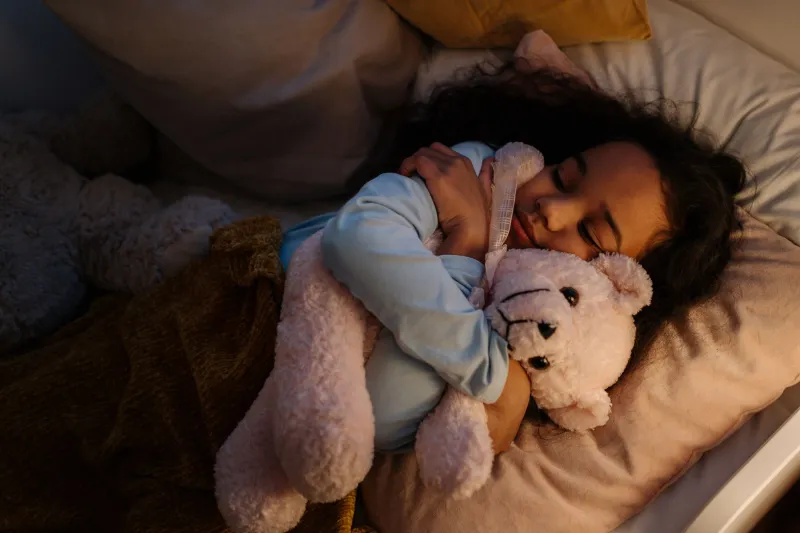
Somewhere in America right now, there is a child sitting next to a brand-new tablet — top of the line, loaded with educational apps, fully charged — and they are ignoring it completely. Instead, they are having a very serious conversation with a stuffed elephant named Gerald about whether clouds taste like marshmallows.
If you're the parent who bought that tablet, you might feel mildly betrayed. But according to child development researchers, you should actually feel pretty great. Because Gerald the stuffed elephant? He's doing more for your child's brain than you might realize.
We're not here to start a war on screen time. Tablets have their place. But in a culture that's increasingly convinced that newer and shinier equals better, it's worth pausing to ask: what are children actually getting from their plush companions that a touchscreen simply cannot provide?
Turns out, the answer is a lot.
The Science of the Snuggle
Child psychologists have studied the relationship between children and their comfort objects — what researchers formally call transitional objects — for decades. The concept was first explored in depth by British pediatrician and psychoanalyst D.W. Winnicott in the 1950s, who observed that children use these objects as a bridge between their inner emotional world and the external environment around them.
In plain English: a stuffed animal helps a child feel safe enough to explore the world.
Dr. Gail Saltz, a clinical psychiatrist and child development commentator, has noted in various interviews that soft, tactile comfort objects help children practice emotional self-regulation — the ability to manage feelings like anxiety, loneliness, or frustration without an adult stepping in every single time. This is not a small thing. Emotional self-regulation is one of the foundational skills for long-term mental health, academic success, and healthy relationships.
A tablet, no matter how sophisticated its parental controls, cannot offer a child that kind of comfort. You cannot squeeze a screen when you're scared. You cannot whisper your worries into a device and feel genuinely heard. But you absolutely can do both of those things with a stuffed bear named JoeJoe.
What Tactile Play Actually Builds
Touch is the first sense humans develop. Before sight is fully formed, before language exists, before a baby can recognize a face — they feel. And that relationship between physical sensation and emotional processing doesn't disappear when a child turns three or four or seven. It evolves.
When a child plays with a stuffed animal, they engage in what developmental experts call open-ended imaginative play — the kind of play with no rules, no levels to unlock, no correct answer. They decide what happens. They write the story. They give voice to characters, navigate conflict, resolve problems, and explore emotions through the safety of pretend.
This kind of play has been linked to:
- Stronger language development. Children narrate stories, invent dialogue, and expand vocabulary in ways that passive screen consumption simply doesn't stimulate.
- Improved empathy. Assigning feelings to a stuffed animal and then responding to those feelings — "Gerald is sad today, so I'm going to give him extra hugs" — is early empathy training. It's remarkably effective.
- Greater creativity. Open-ended play builds what psychologists call divergent thinking — the ability to generate multiple solutions to a problem. This is a skill that matters enormously in adulthood.
- Reduced anxiety. Multiple studies have found that children who have a consistent comfort object experience lower cortisol (stress hormone) levels during stressful situations, including medical procedures, first days of school, and family transitions.
None of this requires WiFi.
But What About Educational Apps?
Fair question. The market for children's educational technology is enormous — worth billions of dollars annually in the US — and many apps are genuinely well-designed. Letter recognition programs, math games, early coding tools: these have measurable benefits when used intentionally and in moderation.
But here's the distinction that often gets lost in the conversation: structured learning and developmental play are not the same thing, and children need both.
An app can teach a child to identify the letter B. A stuffed animal can help a child process the anxiety of starting kindergarten, practice nurturing behaviors that will shape how they treat others for the rest of their lives, and serve as a consistent emotional anchor during a period of enormous change.
These are different jobs. And the stuffed animal's job, it turns out, is harder to replicate.
Dr. Stuart Brown, founder of the National Institute for Play, has written extensively about the role of unstructured, imaginative play in brain development. His research suggests that children who engage regularly in free, self-directed play — the kind a stuffed animal naturally invites — develop stronger neural connections in areas of the brain associated with creativity, problem-solving, and social intelligence.
No app update required.
The Attachment Question: Is It "Too Much"?
Parents sometimes worry when their child becomes particularly attached to a stuffed animal — dragging it everywhere, insisting it attend dinner, refusing to sleep without it tucked just so under their arm. Is this healthy? Should they be concerned?
In the vast majority of cases: no. And actually, quite the opposite.
Strong attachment to a comfort object in early childhood is generally considered a healthy sign of secure emotional development. It means the child has the capacity to form meaningful bonds — a skill that will eventually transfer to human relationships. The stuffed animal is, in a very real sense, a rehearsal for connection.
Most children naturally phase out their dependence on comfort objects as they develop stronger peer relationships and internal coping mechanisms — usually somewhere between ages five and ten, though there's a wide and completely normal range. Forcing the transition early doesn't accelerate development. It just removes a tool the child was using effectively.
Giving Yourself Permission to Go Analog
If you're a parent who has spent real money on the best educational tablet apps and then watched your kid spend three hours talking to a stuffed bear instead — this section is for you.
You did not fail at parenting. You didn't waste money (okay, maybe a little, but that's beside the point). What happened is that your child's instincts are working exactly as designed. Children are biologically wired to seek tactile comfort, imaginative play, and emotional connection. A stuffed companion delivers all three simultaneously, for free, with zero screen time.
At JoeJoe Bear, we think that's worth celebrating rather than second-guessing.
The digital world isn't going anywhere, and your kids will have plenty of time to navigate it. But childhood — the specific, fleeting, impossibly precious window of early childhood — is where the foundation gets built. And some of the best building materials are soft, a little worn around the ears, and answer to names like Gerald.
Or JoeJoe.
Just saying.
The Bottom Line for Busy Parents
You don't have to choose between technology and tradition. But when your child reaches for their stuffed animal instead of the tablet, resist the urge to redirect them. What looks like simple play is actually sophisticated emotional and cognitive work happening in real time.
Let them squeeze the bear. Let them invent the story. Let them decide that yes, clouds probably do taste like marshmallows, and Gerald agrees.
Some of the most important learning your child will ever do happens in exactly those moments — quiet, unhurried, and completely unplugged.