When Teddy Retires: Creative Ways to Turn a Well-Loved Plushie Into a Forever Keepsake
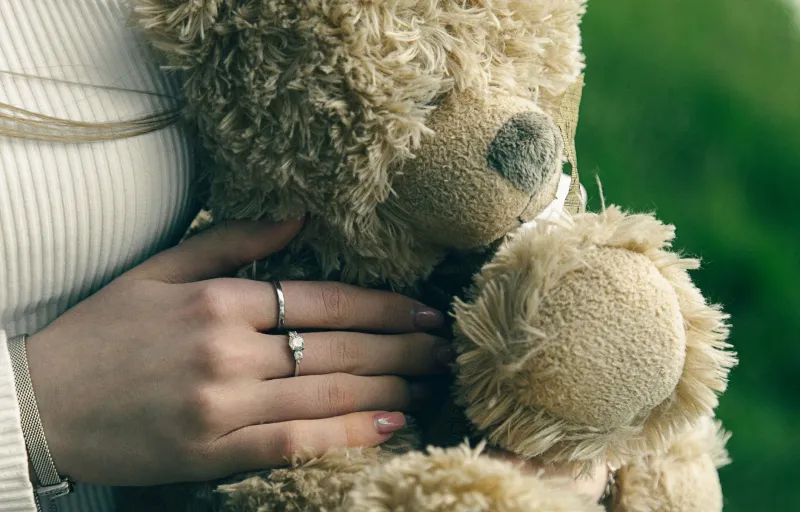
Let's set the scene: You're doing a big bedroom cleanout. Maybe your kid just turned eight, or eleven, or seventeen and is leaving for college in three weeks. You open the closet shelf and there it is — a stuffed bear with matted fur, a button eye that's been reattached at least twice, and a faint smell that is somehow both mysterious and deeply comforting.
You cannot throw that bear away. You physically cannot do it.
Congratulations. You are a normal human being with a heart.
The good news is: you don't have to throw it away. And you don't have to let it live in a plastic bin in the garage for the next two decades either. There is a whole beautiful middle ground between "in the trash" and "buried under holiday decorations," and we're going to walk you through all of it.
First, Let's Acknowledge What We're Really Talking About Here
A stuffed animal that's been truly loved — dragged through airports, cried into, introduced to every houseguest for four years running — isn't just a toy. It's a living record of your child's emotional history. That bear was there for the first night in a big-kid bed. It got smuggled into kindergarten in a backpack. It absorbed approximately one thousand tears and zero complaints.
When a child starts to outgrow a comfort object, it rarely happens overnight. It's a slow drift, like a tide going out. And that transition, while healthy and normal, can carry a surprising amount of grief — for the kid and for the parent watching it happen.
The way you handle that transition sends a message. Tossing the toy without ceremony says: The things you loved don't matter once you're done with them. Preserving it thoughtfully says something much better: The things that mattered to you will always matter to us.
The "Retirement Ceremony" (Yes, Really)
Before you do anything with a beloved plushie, consider marking the moment. This is especially powerful for kids ages 5 through 10, who respond beautifully to ritual and narrative.
Sit down together and talk about the toy's "career." Where did it come from? What adventures did it go on? What was its most important job? You can write this down, record a little video, or just have the conversation out loud. The point is to honor the relationship before it changes form.
Older kids and teens might roll their eyes at a formal ceremony — that's fine. A simple "Hey, what do you want to do with this?" asked with genuine curiosity (not urgency) can open up the same emotional processing in a lower-key way.
Shadow Boxes: The Museum Treatment
For truly iconic plushies — the ones with names, backstories, and dedicated fan followings within your household — a shadow box display is a genuinely gorgeous option.
A deep shadow box frame (widely available at craft stores like Michaels or online) can hold the stuffed animal itself, along with a small placard featuring the toy's name, arrival date, and maybe a one-sentence description of its greatest achievement. "Franklin the Frog. Beloved companion, 2017–2024. Survived three camping trips and one washing machine incident."
Hang it in a hallway, a playroom, or even the child's bedroom as they get older. It becomes a piece of family art — quirky, personal, and absolutely priceless.
Memory Quilts: Wearable History
If you've got more than one plushie to retire (and let's be honest, it's rarely just one), a memory quilt is a stunning long-game project.
The concept: a quilter uses fabric cut from or inspired by the toys to create a patchwork quilt. Some families work with local quilters or Etsy artisans who specialize in this exact thing. Others use the plushies' fabric directly — a square of a favorite bear's belly, a patch from a bunny's ear — stitched together into something that can be used and loved for decades.
This is the kind of heirloom that gets passed down. Your kid's grandchildren might one day nap under a quilt made from toys they never met, and that is genuinely magical.
Restoration Services: A Second Act
Some stuffed animals are too structurally important to repurpose — they need to remain themselves, just... restored to their former glory. There are actual professional toy restoration services in the US (a quick search for "stuffed animal restoration" will surface several well-reviewed options) that can re-stuff, re-stitch, replace eyes, and essentially give a beloved plushie a spa day that results in something displayable.
This is a particularly great option if the toy has been in the family for more than one generation — a bear that belonged to a parent before it belonged to the child is the kind of thing worth investing in.
Passing It Forward (With Intention)
Sometimes a child genuinely wants their beloved toy to go to another kid who needs it. This is a beautiful impulse and worth supporting — but it deserves more ceremony than a donation bin drop-off.
Consider writing a "passport" for the toy — a small card that tells the new owner the toy's name, its history, and what it meant to the original owner. Organizations like the Stuffed Animals for Emergencies program (which donates plushies to kids in crisis situations) are a meaningful destination. Handing a toy forward with a story attached transforms the moment from loss into legacy.
You can also keep it in the family. A younger sibling, a cousin, a neighbor kid who's been eyeing that particular bear for months — sometimes the best second chapter is a familiar one.
The "Just Keep It" Permission Slip
Finally, and this is important: you are allowed to just keep it.
Not everything needs to be a project. Some stuffed animals get to live in a memory box in the top of the closet, wrapped in tissue paper, waiting for the day your kid is 35 years old and finds it while helping you move and bursts into unexpected tears in the hallway.
That moment? That's a keepsake too.
The goal isn't to do something impressive with every toy. The goal is to treat the things your child loved as worthy of consideration — to make a choice rather than just a disposal. Whether that choice is a shadow box, a quilt, a passport to a new home, or a quiet box on a shelf, what matters is that the decision was made with love.
JoeJoe Bear fully endorses this approach. He's been around long enough to know that the things we're loved by — really, truly loved by — deserve a dignified retirement.
And maybe a little ceremony. Just saying.